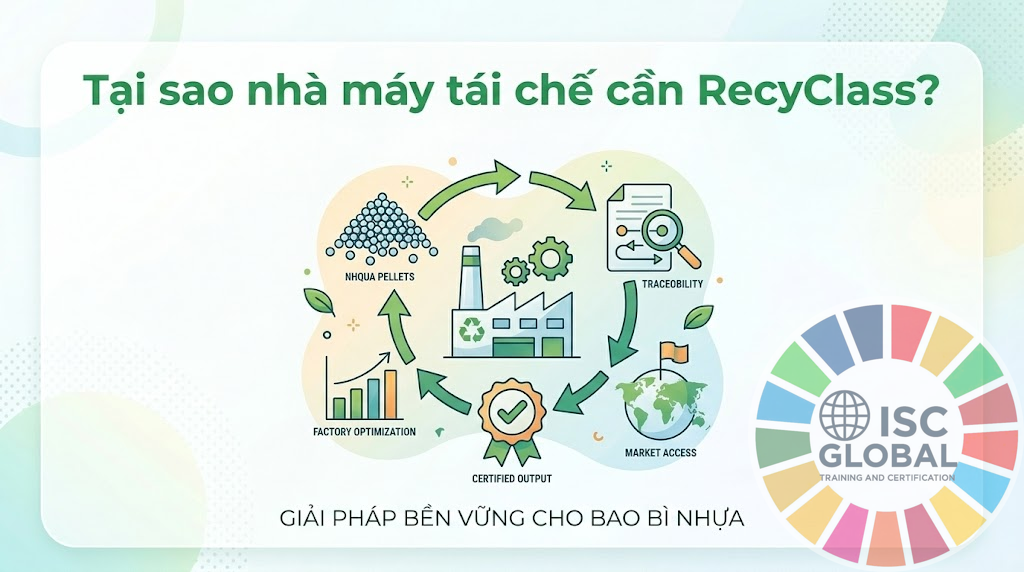
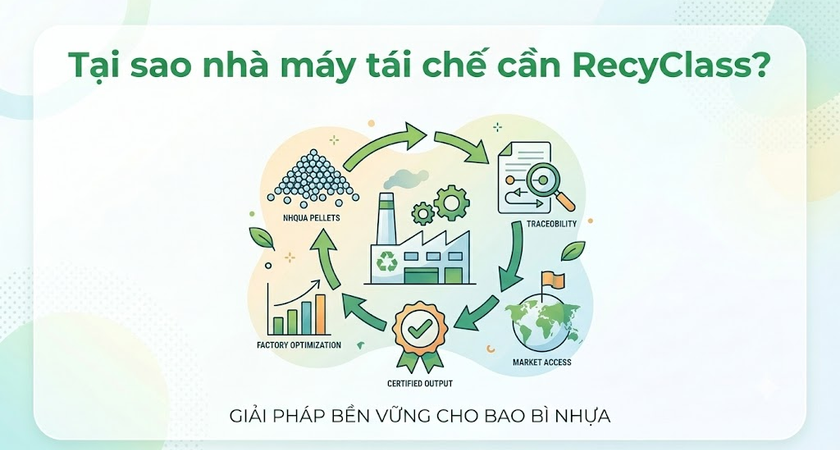
Tại sao nhà máy tái chế cần quan tâm RecyClass Recycling Process?
Một nhà máy có thể sản xuất hàng nghìn tấn recycled pellets mỗi năm, nhưng khách hàng quốc tế ngày càng đặt thêm các câu hỏi về nguồn waste, trạng thái post-consumer/pre-consumer, recycled-content claim, batch traceability, production records và input-output reconciliation.
RecyClass Recycling Process Certification được xây dựng để đánh giá các yếu tố cốt lõi đó trong recycling process.
Ai phù hợp với chương trình?
Recycler cần có process có khả năng chuyển pre-consumer và/hoặc post-consumer plastic waste thành recycled plastic products, đồng thời có các permit cần thiết. Một công ty chỉ kinh doanh hạt nhựa tái chế không mặc nhiên phù hợp nếu không có hoạt động tái chế thực tế trong scope.
Traceability là trái tim của hệ thống
Truy xuất ngược: Customer → invoice → delivery → finished batch → production record → recycling line → recycled input → waste supplier/source.
Truy xuất xuôi: Supplier → receiving → warehouse → sorting/preparation → recycling → output batch → finished goods → customer.
Doanh nghiệp cần quản lý chặt lot/batch numbers, weighing records, supplier documents, inventory, production records, loss, conversion/yield, finished-product quantities và sales documentation.
1 polymer nhưng nhiều SKU có phải audit đơn giản?
Chưa chắc. Ví dụ một nhà máy có 1 polymer, 3 product families, 3 production lines, 100% recycled content và 52 product codes thì cần mapping để xác định 52 mã khác nhau bởi màu, MFI, grade, input source, specification, line, customer requirement hay recycling process.
Không nên tự kết luận 52 product codes đồng nghĩa 52 complete traceability tests; việc sampling và audit effort cần được Certification Body xác nhận.
Module C – điểm đặc biệt với Việt Nam
Applicant Recycling Process nằm ngoài EU27+3 cần lưu ý Module C – Corporate Social Responsibility. Vì vậy dự án tại Việt Nam không nên chỉ tập trung vào production và traceability mà bỏ qua yêu cầu CSR áp dụng.
Nếu sản phẩm dùng cho food contact thì sao?
Với recycled plastic có liên quan food-contact, doanh nghiệp cần xem xét Module A khi thuộc phạm vi áp dụng. Tuy nhiên Module A không nên được hiểu là chứng nhận an toàn thực phẩm hay thay thế nghĩa vụ tuân thủ quy định food-contact của EU.
Doanh nghiệp rPET food-contact nên tách rõ workstream RecyClass traceability/process và workstream regulatory food-contact.
10 nhóm hồ sơ cần chuẩn bị
- Legal permits.
- Scope/product matrix.
- Supplier & waste-origin controls.
- Incoming-material records.
- Identification/segregation.
- Production and batch records.
- Material-flow/reconciliation data.
- Output specifications and sales records.
- Traceability exercises.
- Internal audit, CAPA và management controls.
Cách ISC Global triển khai dự án
Process Mapping → Data Mapping → Gap Assessment → System Design → Documentation → Implementation → Traceability Trial → Internal Audit → Pre-audit → Certification Support.
Cách tiếp cận này giúp tránh tình trạng procedure rất đẹp nhưng dữ liệu thực tế không nối được với nhau.
Kết luận
Nếu doanh nghiệp đang sản xuất rPET, rHDPE, rLDPE, rLLDPE, rPP hoặc các recycled plastics khác, nên bắt đầu bằng Scope & Traceability Readiness Review để xác định certification route, applicable modules, documentation gaps, traceability risks, audit readiness và nguồn lực cần thiết.
Liên hệ tư vấn doanh nghiệp
ISC Global
Hotline / Zalo: +84 933 096 426 – +84 868 591 260
Email: info@iscglobal.asia | van.pham@iscglobal.asia
Website: iscglobal.asia | iscglobal.edu.vn